
Neapolitan and
Roman pizza: the difference
Dough, hydration, baking, crust: two Italian schools, two results on the plate. Here is what really sets them apart, and the style we work with at Di Micheli, Place des Cardeurs in Aix-en-Provence.
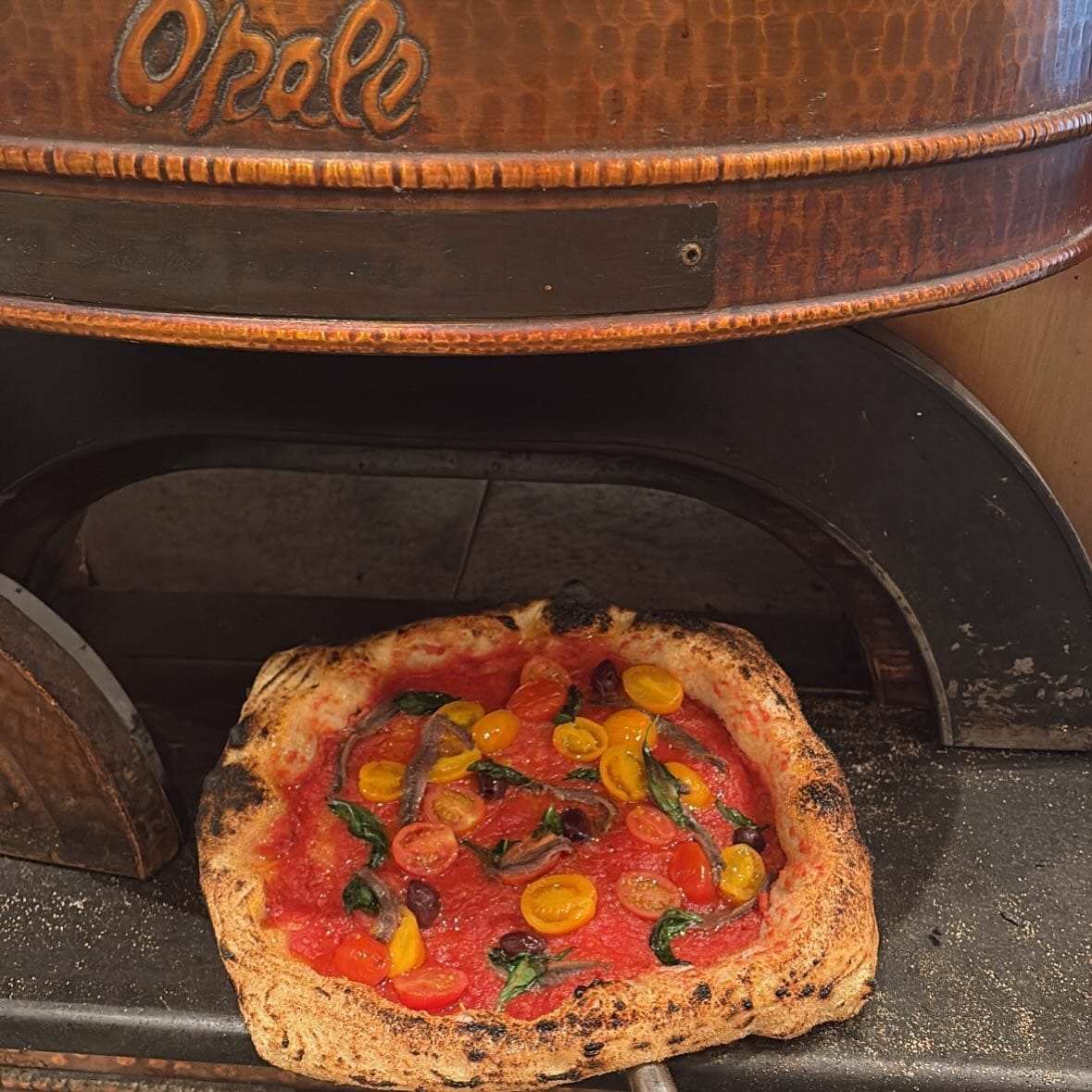
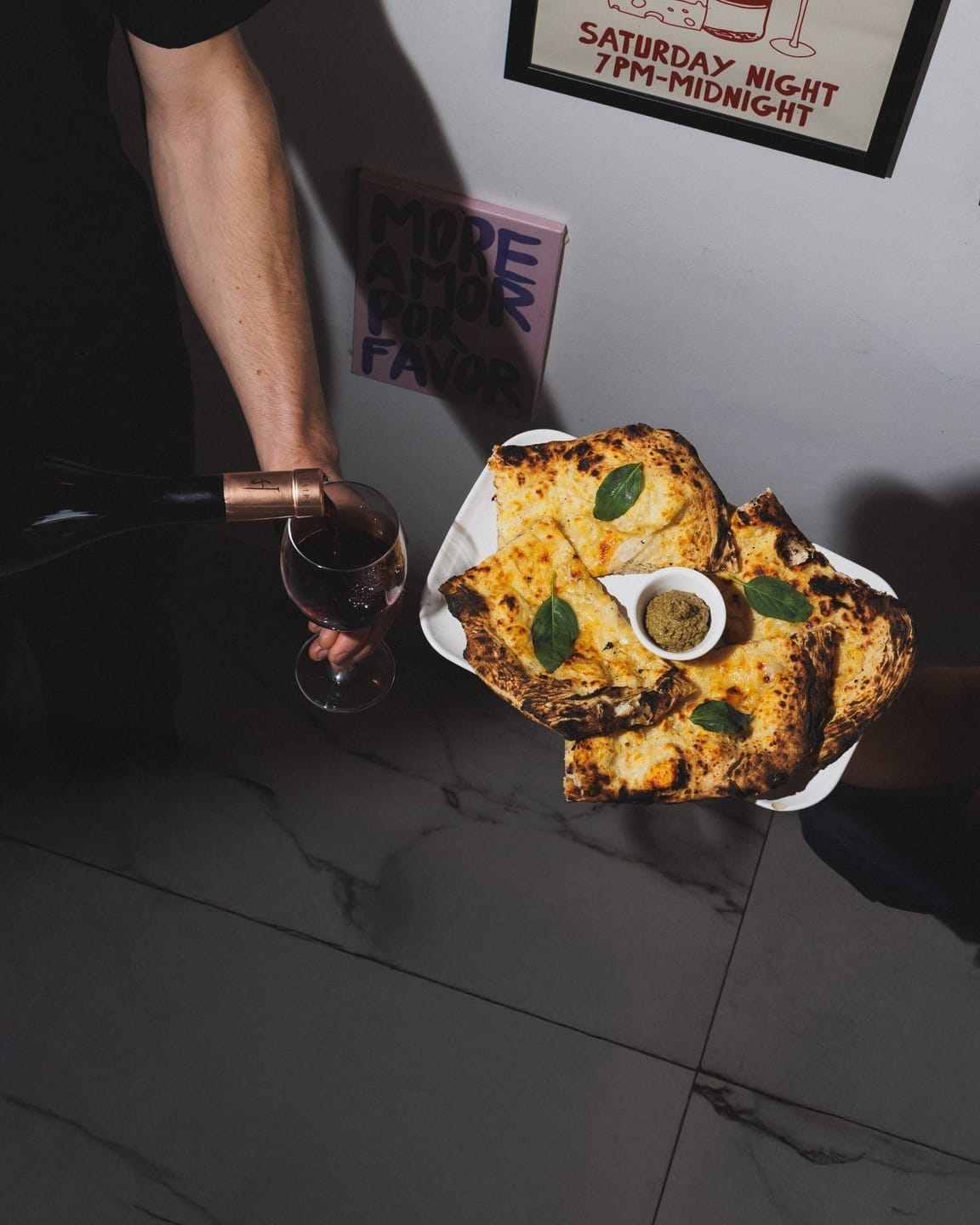
Neapolitan: puffed crust, lightning bake
You recognise it by its cornicione, the thick, airy rim around a thin, supple base. Behind that relief sits a very wet dough and a long rest: at Di Micheli it ferments for 24 hours at 70% hydration before spending a few seconds only in a wood-fired oven at 480°.
That short, intense heat gives a soft pizza, slightly moist at the centre, with a supple rim marked by golden blisters. It stays so tender that people often eat it with a fork — that is not a flaw, it is the signature.
Roman: a thin, crisp dough
In its "tonda" version served on a plate, the Roman stands out with a much thinner dough, rolled right to the edge, with no pronounced cornicione. It usually contains a little oil and bakes longer, at a more moderate temperature.
The result: a dry, crackling texture, almost brittle. Where the Neapolitan plays on suppleness, the Roman bets on crispness and finesse. Two philosophies, each with its followers — neither is better than the other.
- 24hFermentation of our Neapolitan dough
- 70%Hydration rate
- 480°Wood-fired oven vault
The comparison, criterion by criterion
Crust, dough, baking, texture: what separates the soft Neapolitan from the crisp Roman, so you can pick the pizza that suits you.
| Criterion | Neapolitan pizza | Roman pizza (tonda) |
|---|---|---|
| The crust | Thick, airy, puffed cornicione around a thin base at the centre. | Dough rolled right to the edge, with no pronounced cornicione. |
| The dough | High hydration, supple and thin base at the centre. | Much thinner dough, usually containing a little oil. |
| The bake | A few seconds only in a wood-fired oven at 480°. | A longer bake, at a more moderate temperature. |
| The texture | Soft, slightly moist at the centre, with a supple rim. | Dry, crackling and almost brittle. |
| The spirit | Bets on suppleness and softness. | Bets on crispness and finesse. |
Two schools, one way to settle it
The difference is tasted, not read
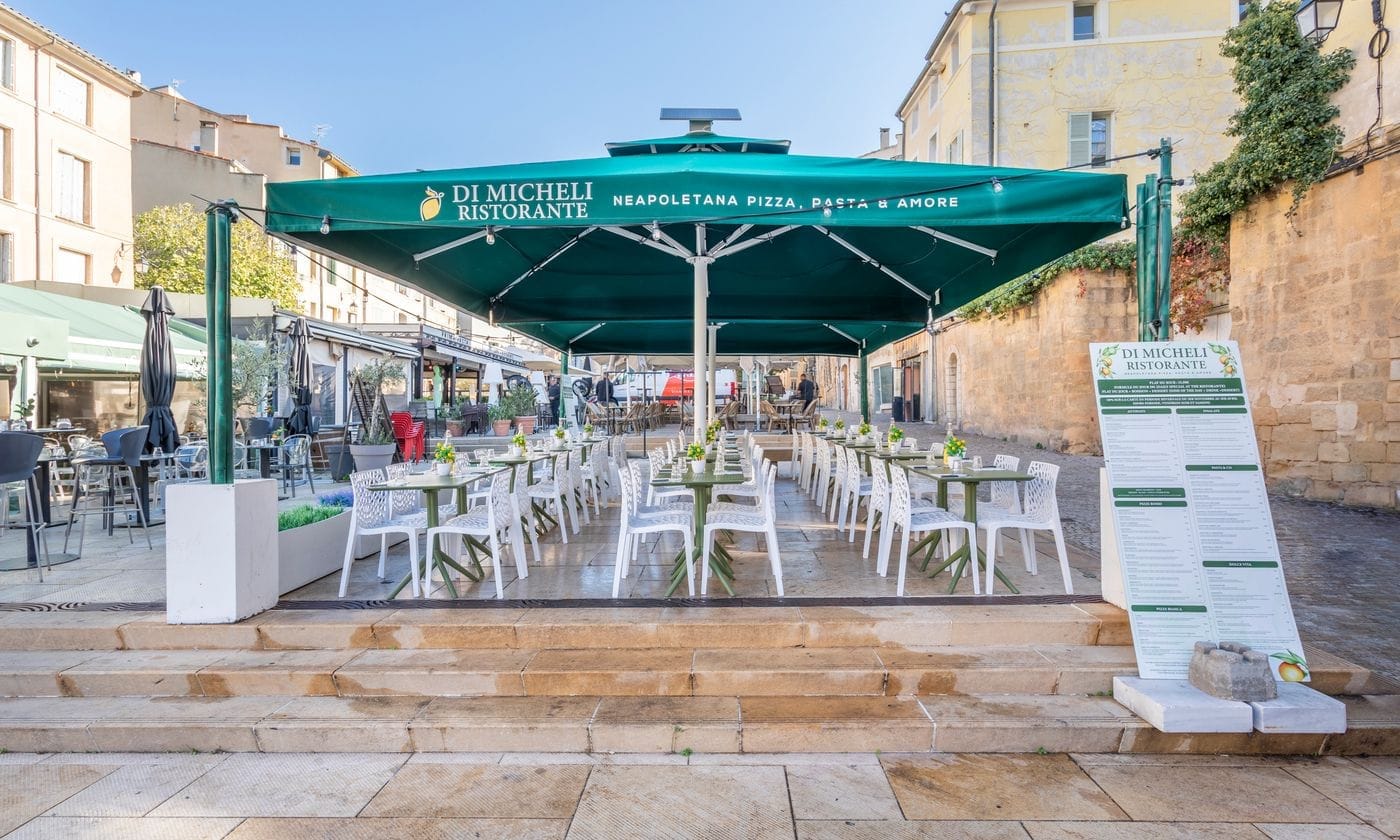
Place des Cardeurs, inside or on the terrace: the pizza leaves the oven and arrives scorching hot. That is where — and only where — you find out which one is for you.
Which pizza do we serve in Aix?
At Di Micheli we chose the contemporary Neapolitan. All our craft points to that tradition: long-fermented dough, a wood-fired oven, fresh produce, no frozen dough and a deliberately short menu.
If you are after a pizza with a supple, puffed rim, baked over wood in the very heart of Aix-en-Provence, that is the style you will find on our plates, at lunch and dinner, inside or on the terrace.
Our team is here to guide you. Torn between a margherita and a burrata? Ask us and we will settle it together.
Why this guide
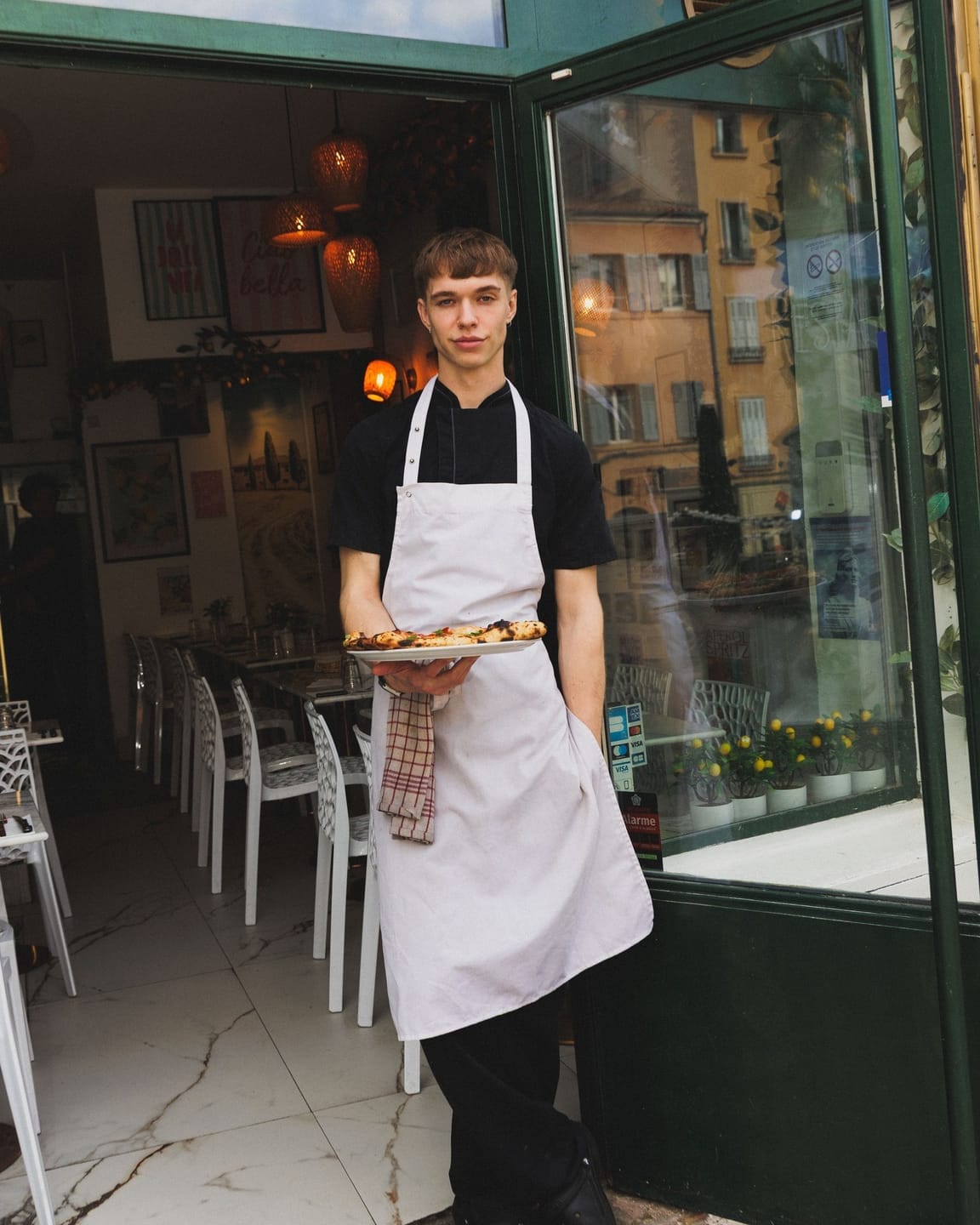
It is one of the questions we get asked most in the dining room. The Neapolitan and the Roman are the two great traditions of Italian pizza, and yet everything sets them apart, from the dough to the bake. Rather than answering only between two services, we wanted to gather a clear guide here, so everyone understands what is happening on their plate.
The point is not to say that one pizza beats the other, but to help you recognise each one and choose according to your mood. We are a family trattoria open since September 2021: what matters to us is that you know what you are eating and why it tastes good.
Pizza is a rich and codified Italian culinary heritage. To dig into its history and its variants, browse the page dedicated to pizza on Wikipedia, then come and compare for yourself at our table.
It all starts with the Neapolitan pizza, its 24-hour fermented dough and its wood-fired bake. Then everyone picks a topping: the margherita way or the burrata pizza way. Whether you lean soft Neapolitan or crisp Roman, the best answer is still to taste. See you very soon in Aix-en-Provence.
Keep exploring
A few pages to go further after your read, from the Neapolitan pizza to booking your table.
Neapolitan and Roman: your questions
What is the main difference between Neapolitan and Roman pizza?
The Neapolitan has a thick, soft rim — the cornicione — and a very fast bake at high temperature, while the Roman tonda has a thin dough rolled to the edge, crisper and baked longer. The first bets on softness, the second on crunch.
Is Neapolitan pizza easier to digest than Roman?
The Neapolitan owes its lightness to a long fermentation and a high dough hydration. At Di Micheli our dough ferments for 24 hours at 70% hydration, which makes it supple and easier to digest. The Roman, being thinner, has its own lightness from its thinness.
Which pizza does Di Micheli serve in Aix-en-Provence?
We work the contemporary Neapolitan pizza, baked in a wood-fired oven at 480°. You will find it on our menu, at lunch and dinner, in our trattoria on Place des Cardeurs, inside or on the terrace.
Why does the Neapolitan bake so fast?
The Neapolitan wood-fired oven reaches around 480°, which bakes the pizza in very little time. That intense heat puffs the rim and keeps the centre soft — the signature of a true Neapolitan.
Why is the Roman so crisp?
Because its dough is rolled very thin, usually contains a little oil and bakes longer at a more moderate temperature. More water evaporates: the texture turns dry, crackling, almost brittle.
Where can I eat a Neapolitan pizza in Aix-en-Provence?
At Di Micheli, 13 Place des Cardeurs, 13100 Aix-en-Provence, right in the pedestrian centre. You can book your table online or by phone and come and taste our wood-fired Neapolitan pizza.
Come and compare for yourself
After the read, the tasting: book your table at Di Micheli, Place des Cardeurs.