Few seeds, little water
The San Marzano holds very few seeds and releases little juice, so the sauce does not soak the dough — decisive on a pizza seared in seconds. Low water content also concentrates the flavour.
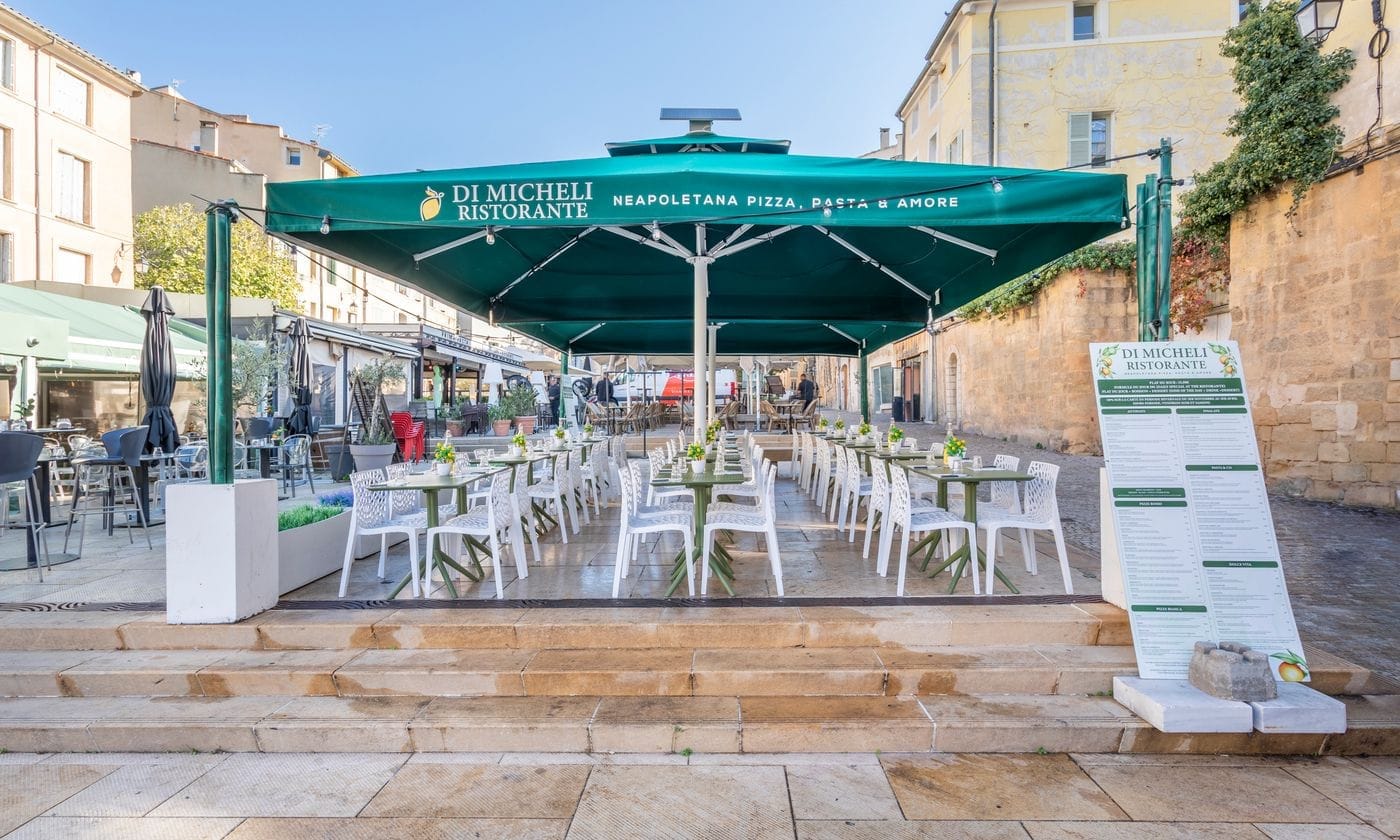
See you on Place des Cardeurs.
13 Place des Cardeurs, 13100 Aix-en-Provence
Lunch : 11h30-14h30
Dinner : 18h00-23h00
At Di Micheli everything starts with produce: nothing frozen, a short selection, ingredients that hold their rank. On a Neapolitan pizza, that begins with the tomato — and only one earns the title of queen: the San Marzano, born at the foot of Vesuvius.
The gist in 30 seconds
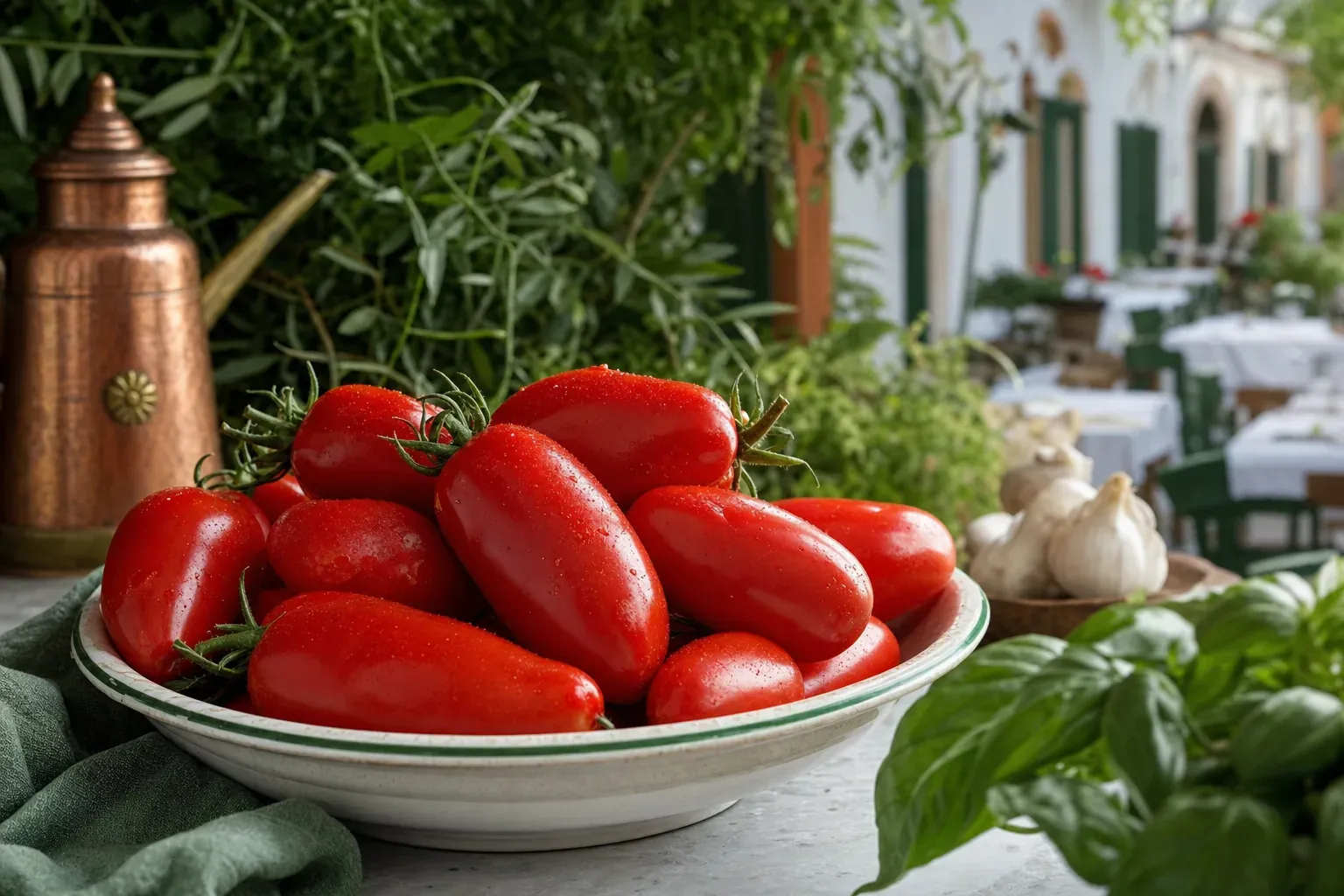
The San Marzano is a long tomato grown in the Sarno plain at the foot of Vesuvius, protected by the DOP appellation. Few seeds, little water, dense, sweet, low-acid flesh: it holds up to the flash bake of the wood-fired oven without soaking the dough. On a Neapolitan it is used raw, simply crushed and salted. It is what gives a real margherita its taste.
The San Marzano is no ordinary tomato. It is a long, almost cylindrical variety, recognisable by its tapered shape and slightly pinched tip, far from round table tomatoes. Thin but firm skin, deep red, thick flesh with very few seed cavities.
What truly defines it is a strict specification: the real San Marzano carries the "San Marzano dell'Agro Sarnese-Nocerino DOP" appellation, which governs the variety, the growing area and the harvest. Without that label, a mere "San Marzano type" tomato offers no such guarantee of terroir and taste.
The San Marzano's secret lies first in its soil: the Sarno plain at the foot of Vesuvius, on rare volcanic ground rich in minerals. That mix of volcanic earth, Mediterranean climate and Sarno water gives the tomato its aromatic concentration.
The DOP appellation precisely delimits this area between Naples, Salerno and Avellino. Harvest is still done by hand, tomato by tomato, at full ripeness — never mechanised. That is why the real San Marzano remains an exceptional product, on far fewer tables than people think.
On a pizza baked in seconds, the tomato cannot fail. The San Marzano ticks the three boxes that matter.
The San Marzano holds very few seeds and releases little juice, so the sauce does not soak the dough — decisive on a pizza seared in seconds. Low water content also concentrates the flavour.
Its thick flesh is naturally sweet with a low, balanced acidity. It needs neither added sugar nor long cooking to soften its edges.
In the wood-fired oven it does not collapse into mush: it keeps its body and releases its aroma without turning bitter — exactly what the flash bake demands.
Blind, the difference hits the palate. Criterion by criterion, here is what sets a San Marzano DOP apart.
| Criterion | San Marzano DOP | Standard peeled tomato |
|---|---|---|
| Taste | Sweet, concentrated, long finish | More neutral, sometimes grassy |
| Acidity | Low, naturally balanced | Often sharp, corrected with sugar |
| Texture | Dense flesh, few seeds and water | More watery, more seeds |
| Hold when baked | Stable at high heat, keeps body | Collapses faster into mush |
| Best use | Raw pizza sauce, short bake | Long-simmered sauces |
Il pomodoro del Vesuvio
Volcanic soil, Campanian sun, hand harvest: everything that makes the San Marzano ends up in the sauce of a real margherita — wood-fired on Place des Cardeurs, just like in Naples.
The Neapolitan method with the San Marzano comes down to one idea: do as little as possible. Where many kitchens simmer for hours, Naples does the opposite.
On a Neapolitan the sauce is not cooked before the oven. You crush the San Marzano by hand, add a pinch of salt, maybe a drizzle of oil, and that's it. It cooks only on the pizza, in seconds. The tomato stays alive and fruity.
A good San Marzano needs no help. Drowning it in garlic, sugar or herbs would mask exactly what you paid for: its taste. Fresh basil comes as it leaves the oven; the tomato keeps the lead role.
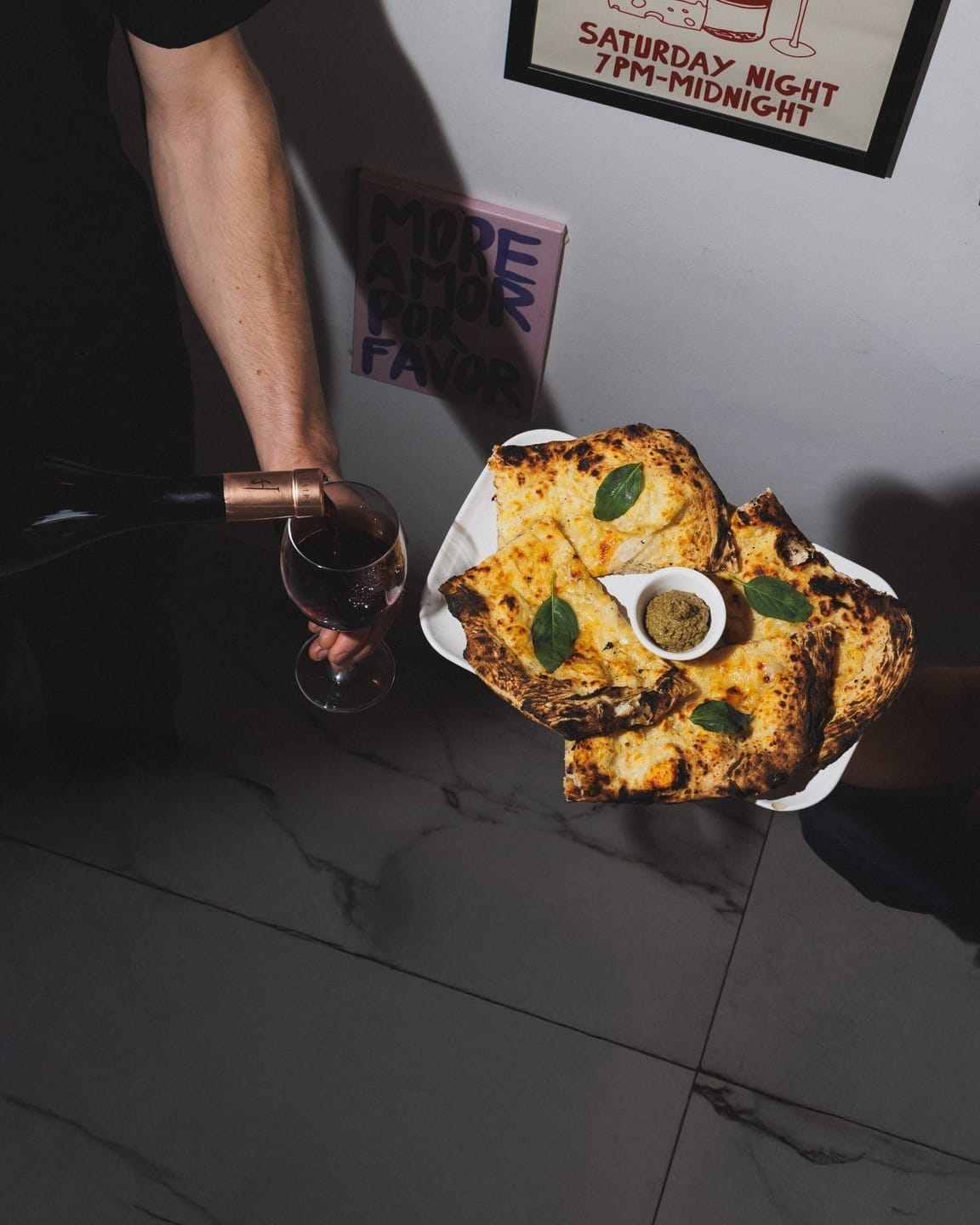
The margherita is the ultimate tomato test. Three ingredients, no more: tomato, mozzarella, basil. With nothing to hide behind, each is exposed — and the base can only be excellent if the tomato is.
Deep red, sweet, barely tart, the San Marzano dialogues with the mozzarella and the basil without ever dominating. Swap it for any tomato and the margherita loses its reason to exist.
Many tins say "San Marzano" without the right. Here are the label markers that never lie.
Look for "San Marzano dell'Agro Sarnese-Nocerino DOP" and the yellow-and-red EU protected-origin logo. Without it, it is only a "San Marzano type" tomato.
Real tins carry a serial number and the guardian consortium's ID, allowing traceability batch by batch.
The DOP requires whole peeled tomatoes in their juice — no chopped, no concentrate. The long shape must stay visible.
The label must state the growing area in Campania, between Naples, Salerno and Avellino. A vague origin is a red flag.
At Di Micheli this demand on the tomato is no detail: fresh produce, nothing frozen, a short menu so every plate holds its level. The tomato base of our Neapolitan pizzas follows the Naples method — crushed, salted, wood-fired.
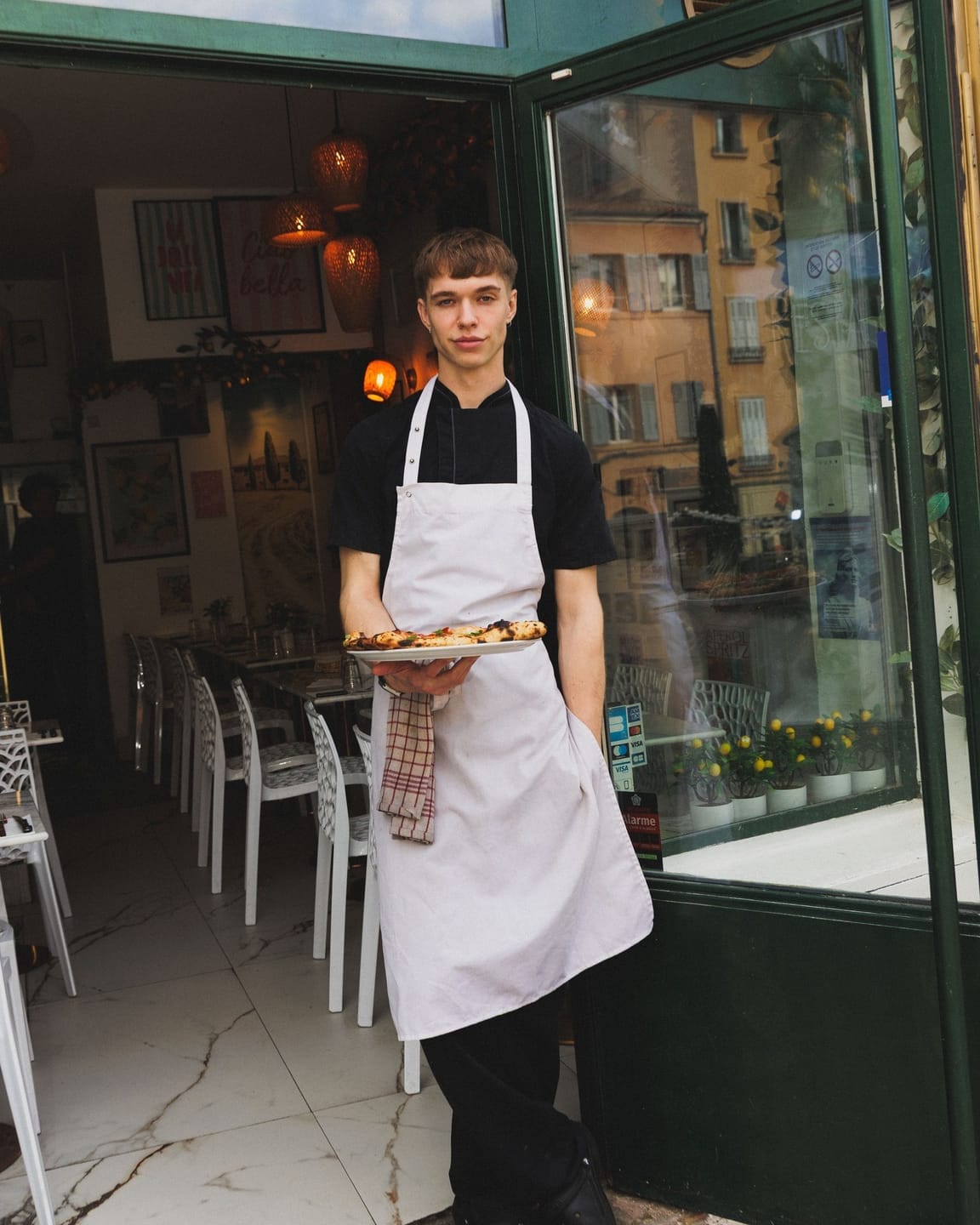
Our contemporary Neapolitan pizza, awarded 2024 European Champion, rests as much on the 24-hour dough as on the quality of its sauce. Come taste it on Place des Cardeurs, lunch and dinner: the best way to understand the San Marzano is to eat it on a scorching margherita.
For pizza, DOP tins are often the best choice: picked and canned at full ripeness, they give a consistent taste year-round. Fresh San Marzano is excellent in season but fragile and hard to find outside Campania.
Yes, but the result changes. Quality Italian peeled tomatoes or Piennolo del Vesuvio can stand in. A standard table tomato, more watery and acidic, will soak the dough and unbalance the margherita.
The AVPN specification recommends San Marzano dell'Agro Sarnese-Nocerino DOP tomatoes, or failing that suitable peeled tomatoes grown in Campania. The San Marzano is the reference, though a few regional equivalents are allowed.
Because it cooks on the pizza, in seconds at high heat. A raw, crushed and salted San Marzano keeps its fruit and freshness; pre-cooking would concentrate it and lose that liveliness. It is the traditional Naples method.
Look for the "San Marzano dell'Agro Sarnese-Nocerino DOP" wording, the yellow-and-red EU DOP logo, a consortium number and whole peeled tomatoes in their juice. A mere "San Marzano type" offers no origin guarantee.
At Di Micheli, 13 Place des Cardeurs, 13100 Aix-en-Provence. Our margherita is wood-fired, lunch and dinner, inside or on the terrace. Book online or call 06 34 33 98 93.
From the dough to the wood-fired oven, a few pages to understand what makes a true Neapolitan.
The San Marzano is only one piece. To understand our pizza napolitaine Aix-en-Provence, from dough to cornicione, discover the restaurant's dedicated page.
Taste the San Marzano margherita, wood-fired at Di Micheli, Place des Cardeurs.