The cornicione
That thick, puffed, airy rim circling the pizza is the Neapolitan signature. If it is flat, rolled right to the edge, you are not looking at a Neapolitan.
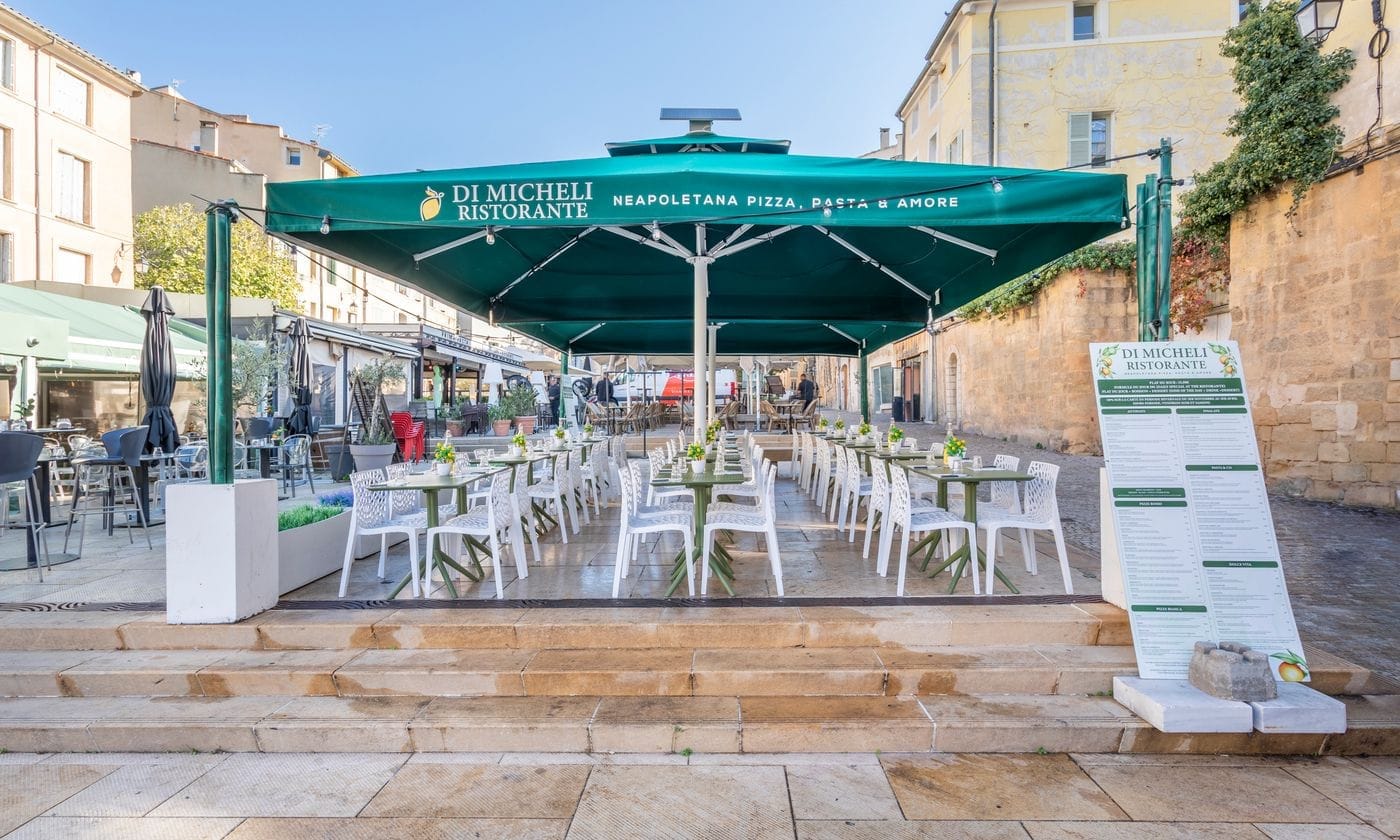
See you on Place des Cardeurs.
13 Place des Cardeurs, 13100 Aix-en-Provence
Lunch : 11h30-14h30
Dinner : 18h00-23h00
The rim, the spots, the centre, the way you pick it up: a Neapolitan can be read before the first bite. Here are the markers we use at the oven every day, on Place des Cardeurs in Aix-en-Provence.
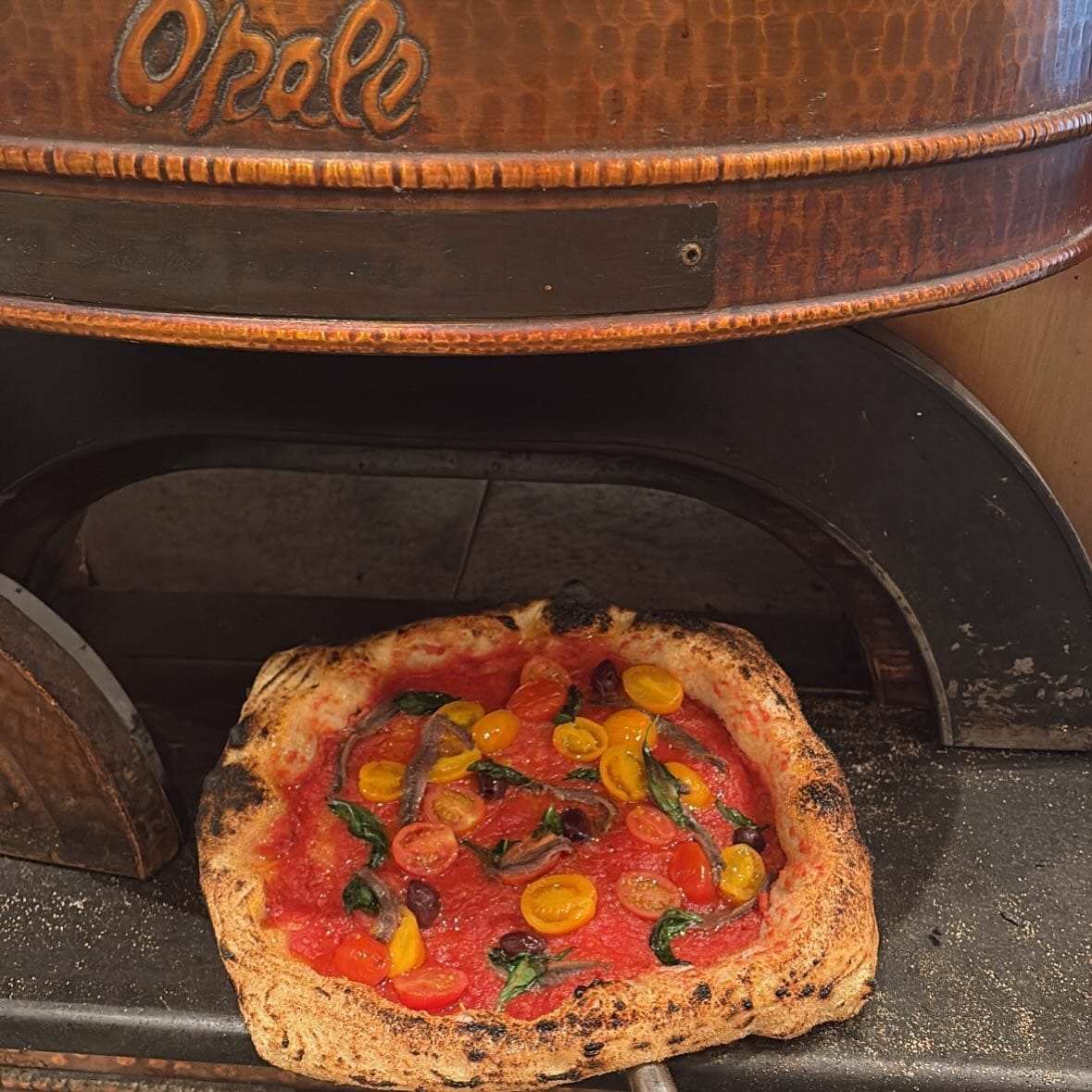
You do not need to be a pizzaiolo. Look at the rim, the surface, the centre, then pick it up: four moves and you know.
That thick, puffed, airy rim circling the pizza is the Neapolitan signature. If it is flat, rolled right to the edge, you are not looking at a Neapolitan.
Golden, sometimes almost black blisters speckling the rim like a coat. They are drawn by the seconds spent at 480° — impossible to fake in a lukewarm oven.
Under the topping, the base stays thin, soft and slightly moist. A Neapolitan does not crack: it folds. That is the mark of a very wet dough.
If the slice droops when you lift it, all is well. People happily eat it with a fork, or folded like a wallet: that is not a flaw, it is the tradition.
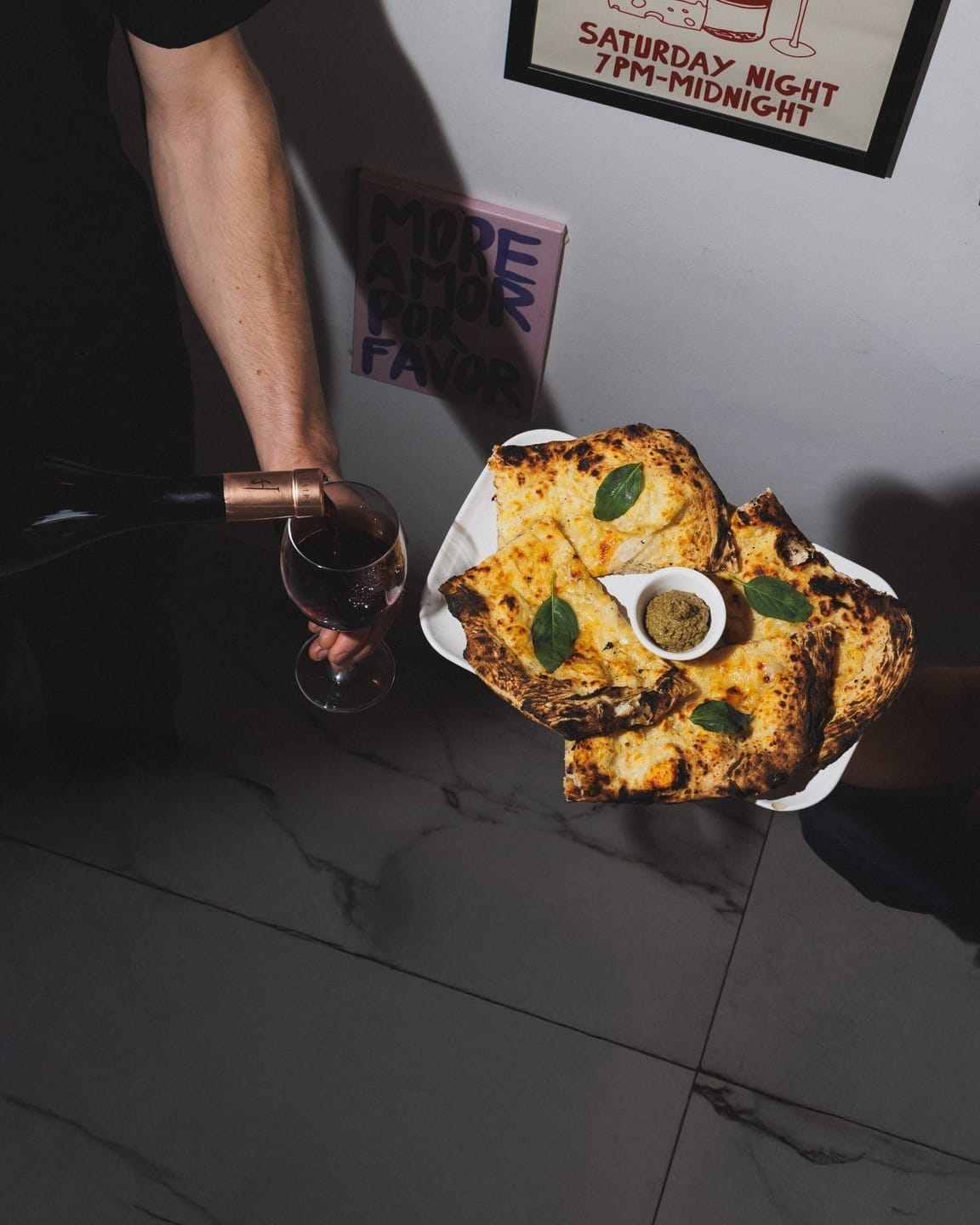
The rim does not puff by accident. Behind that relief sits a very wet dough and a long rest: at Di Micheli it ferments for 24 hours at 70% hydration before it reaches the oven. That time, invisible on the plate, is what makes the Neapolitan supple and light to digest.
The test happens in the nose and the mouth. A properly fermented dough smells of fresh bread and keeps a tender chew. A rushed dough, or worse a frozen one, stays silent: it feeds you without telling you anything. Here no dough is ever frozen, and the menu stays deliberately short so every pizza holds that standard.
A true Neapolitan is not baked, it is seared. The wood-fired vault reaches 480° and the pizza spends only a few seconds inside. That short, brutal heat puffs the cornicione at once, marks the leoparding and leaves the centre soft before the water in the dough has any time to evaporate.
That is also why a Neapolitan is judged the moment it lands on the table, scorching. A few minutes later the base relaxes and the contrast between supple rim and tender centre fades. A lukewarm electric oven, by contrast, dries the dough without ever giving it that relief: you can see the difference with the naked eye.
Markers are read, pizza is tasted
Place des Cardeurs, inside or on the terrace: the pizza leaves the oven and arrives scorching hot. Puffed rim, golden blisters, tender centre — see for yourself.
Plenty of menus print "Neapolitan" without the codes to back it. A thin, crisp dough rolled right to the edge, for instance, belongs to the Roman school — a fine pizza, but another tradition, with its own followers. Neither is better than the other: you just want to know which one you ordered.
A perfectly even rim with no blister at all often gives away an oven that is too gentle. A dry, brittle base signals a dough with little hydration, or one baked too long. And a pizza that holds perfectly straight between your fingers, never bending, has probably never met 480°.
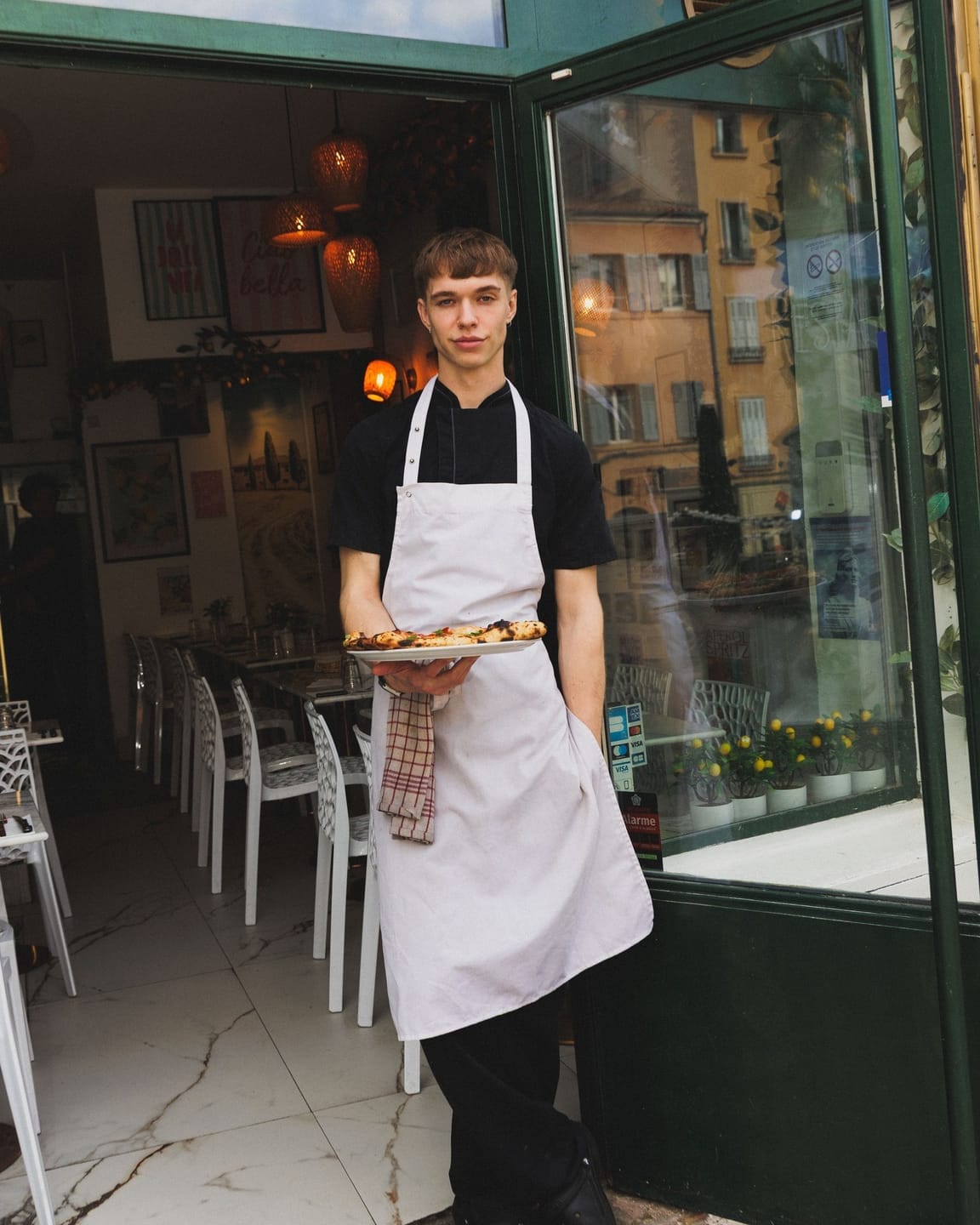
Our team is in the dining room for exactly that, at lunch and dinner. Unsure about what is on your plate? Ask us and we will show you what to look at.
It is one of the questions we get asked most in the dining room. The word "Neapolitan" appears on many menus, but it covers very different realities. Rather than answering only between two services, we wanted to gather here the simple markers that let anyone settle it alone, in front of their own plate.
The point is not to hand out good and bad marks, but to make a craft legible. We are a family trattoria open since September 2021: what matters to us is that you know what you are eating and why it tastes good. Once those four markers are in your head, you will never look at a pizza the same way.
The best way to recognise a real Neapolitan is still to share one at our Italian table in Aix-en-Provence.
Neapolitan pizza is a codified culinary heritage, recognised far beyond Italy. To dig into its history and its rules, browse the page dedicated to Neapolitan pizza on Wikipedia, then come and check for yourself at our table.
It all starts with the Neapolitan pizza, its 24-hour fermented dough and its wood-fired bake. Then everyone picks a topping: the margherita way or the burrata pizza way. The markers are now in your hands: the rest plays out in Aix-en-Provence, one slice at a time. See you very soon.
A few pages to go further after your read, from the dough and the wood-fired oven to booking your table.
By its cornicione — the thick, puffed, airy rim — speckled with golden blisters known as leoparding, and by its thin, soft base at the centre. It is so supple that it folds when you lift it: the signature of a very wet dough seared at very high temperature.
Those are the golden, sometimes almost black blisters that speckle the rim like a leopard's coat. They appear when the pizza spends a few seconds only in a wood-fired oven heated to around 480°. An oven that is too gentle will not produce them.
Because its dough — fermented for 24 hours at 70% hydration at Di Micheli — is seared in seconds: the water has no time to evaporate. The centre stays supple and slightly moist. That is not a baking fault, it is the texture we are after.
Nothing requires it, but it is common and entirely traditional. Since the base is thin and supple, the slice droops if you hold it with your fingertips. In Naples it is also folded like a wallet and eaten by hand.
The Neapolitan has a thick, soft rim and bakes very fast at high temperature. The Roman tonda has a thin dough rolled to the edge, with no cornicione, crisper and baked longer. The first bets on softness, the second on crunch.
At Di Micheli, 13 Place des Cardeurs, 13100 Aix-en-Provence, right in the pedestrian centre. Our Neapolitan pizza is baked in a wood-fired oven, at lunch and dinner, inside or on the terrace. You can book your table online or by phone.
After the read, the tasting: book your table at Di Micheli, Place des Cardeurs.